Tuscany hot springs and spas: how to choose the right hotel
Why Tuscany hot springs and spas belong on your hotel short list
Tuscany hot springs and spas shape entire hotel choices for many travellers. Across this region of Italy, ancient springs and modern spa retreats sit side by side, giving you rare access to wellness traditions that began with Etruscans and Romans. When you book a hotel spa here, you are not just reserving a room, you are buying daily access to thermal water rituals that have been refined over centuries.
The context is unique because Tuscany has at least 39 mapped thermal springs, with hot water rising naturally from a geothermal system that still shapes the landscape. Regional tourism sources such as Visit Tuscany and studies by the Tuscan regional government list dozens of active springs, confirming how dense this network is. These springs in Tuscany range from wild, free hot springs in riverbeds to refined terme complexes attached directly to elegant properties, so your first decision is how close you want to sleep to the waters themselves. For someone planning a trip focused on relaxation, choosing a hotel spa within walking distance of thermal pools can completely change how you use your time.
Modern tourists come for wellness, but they also follow a path laid down by Etruscans and Romans who used these hot waters for ritual and health. That long history explains why you find terme villages such as Saturnia, Bagno Vignoni, and Bagni San Filippo where almost every view, restaurant, and hotel is oriented toward the springs. When you compare hotels across Tuscany, look carefully at whether they offer direct access to thermal springs or only standard pools filled with regular mineral water, and consider how that fits with other experiences you want, such as wine tasting or hill town visits.
Saturnia hot springs: where to stay for the iconic cascades
The most photographed hot springs in Tuscany are the Saturnia hot springs, especially the famous Cascate del Mulino waterfalls. Here, pale blue thermal water flows over limestone terraces, creating natural pools that stay around 37.5 °C according to local spa resort publications and operator data, warm enough to feel hot but still comfortable for long soaks. If you plan to visit Saturnia more than once during your stay, it makes sense to base yourself in a nearby hotel spa rather than driving back and forth each day.
Cascate del Mulino, sometimes written as cascate del Mulino, is free to access and open at any time, which strongly influences how you plan your days. Many guests choose a hotel in or near the village of Saturnia so they can walk or take a short car ride to the waterfalls at sunrise and again late at night, when the color of the water shifts under changing light. For example, Terme di Saturnia Natural Spa & Golf Resort is a luxury hotel beside the terme Saturnia complex with direct access to private thermal pools, while mid range agriturismi such as Agriturismo Le Cascatelle or Agriturismo Il Capannone sit within a 5–10 minute drive and offer easier parking after dark. To move safely between the natural pools, most travellers keep water shoes in their bag because the rock under the thermal water can be slippery and uneven.
Close by, the terme Saturnia complex offers a different experience, with controlled thermal pools, spa treatments, and quieter corners away from the main waterfalls. Staying in a hotel spa connected to Terme Saturnia gives you private access to Saturnia thermal waters without the crowds at the cascades, which suits travellers who value calm over spectacle. Many guests split their time, spending some days at the wild Saturnia hot springs and other days inside the terme Saturnia facilities, using both the natural waterfalls and the curated thermal pools. A typical photo here might show the cascades from above at dawn, with steam rising from the turquoise basins and a hotel in the distance.
Bagni San Filippo and Fosso Bianco: wild springs in the forest
On the eastern side of Tuscany, Bagni San Filippo offers a very different hot springs atmosphere from Saturnia. Here, the Fosso Bianco thermal springs run through a wooded ravine, where mineral water has created white formations that locals call the Balena Bianca, or white whale. The contrast between the forest shade and the steaming hot water makes this one of the most atmospheric springs in Tuscany for travellers who enjoy a more natural setting.
Hotels in and around Bagni San Filippo are generally smaller and simpler than the large spa resorts near Saturnia, but they give you the priceless advantage of being minutes from the Fosso Bianco pools. Many visitors plan two or three days here, using the mornings for quiet soaks in the thermal pools and the afternoons for drives through the Val d’Orcia countryside. Because access paths can be muddy and the limestone under the waters is irregular, water shoes are strongly recommended, especially if you are carrying a bag or camera. Simple guesthouses in the village, such as Hotel Terme San Filippo or small B&Bs, are usually within a 10–15 minute walk of the forest entrance, while country hotels in the surrounding hills are often a short drive away.
When you search for Bagni San Filippo or Fosso Bianco on Google Maps, you will see that parking is limited and the road is narrow, so arriving by car early in the day is wise. Public parking areas near the trailhead can fill quickly in high season, and local authorities sometimes restrict access when the ravine is crowded. Some travellers choose to stay in a hotel spa elsewhere in Tuscany and make a day trip here, but that can compress your time and force you to visit during the busiest hours. If wild hot springs appeal to you, consider at least one night in or near Bagni San Filippo so you can enjoy the thermal water at quieter times, when the forest is almost silent and the white rock formations glow in soft light.
Bagno Vignoni and Val d’Orcia: thermal water with cinematic views
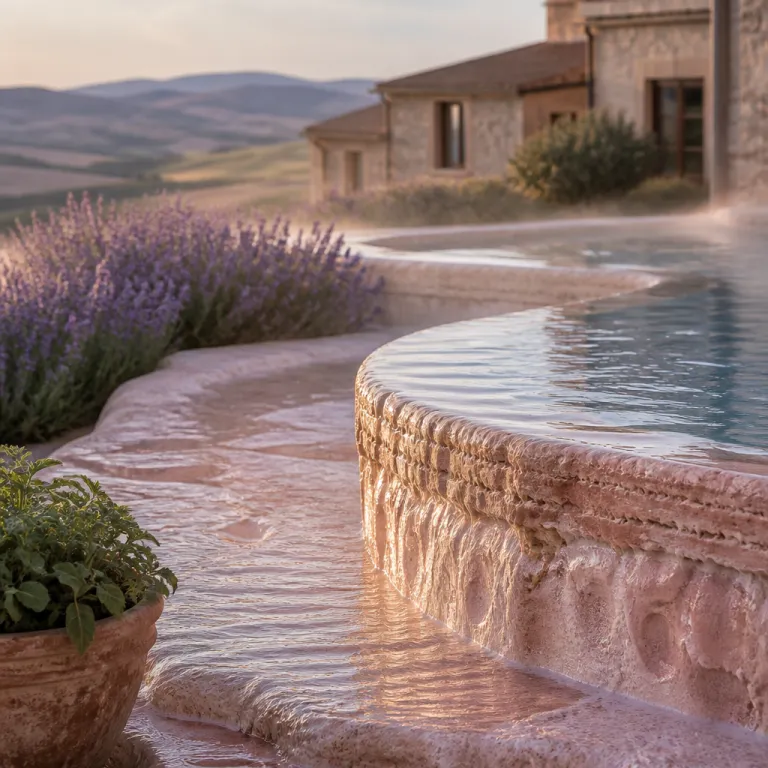
Bagno Vignoni is one of the most distinctive thermal villages in Tuscany because its main square is a vast stone basin filled with steaming mineral water. You cannot bathe in this central pool, but the sight of hot water drifting through the heart of the village creates a theatrical atmosphere that feels almost unreal. Around the edges, several hotel spa properties channel the same thermal water into modern pools and wellness areas reserved for guests, often with panoramic views over the Val d’Orcia hills.
The wider Val d’Orcia landscape surrounding Bagno Vignoni is a UNESCO listed area of rolling hills, cypress lined roads, and medieval towns, which makes it ideal for a longer trip that combines culture and spa time. Many travellers choose a hotel spa here as a base for four or five days, spending mornings in thermal pools and afternoons exploring nearby villages such as Pienza and Montalcino. Because the springs in Tuscany around Val d’Orcia are less crowded than Saturnia, you often find more space to float, watch the changing color of the hills, and simply breathe. Typical properties in the village, including Hotel Le Terme and the more upscale Adler Spa Resort Thermae just outside the centre, are only a few steps or a short drive from the historic basin, while countryside resorts may be a 5–20 minute drive away.
Access is straightforward by car, and most hotels provide clear directions that match what you see on Google Maps, so arrival is rarely stressful. If you prefer not to drive, some properties can arrange transfers from nearby train stations such as Chiusi-Chianciano Terme, but having your own car makes it easier to combine several thermal springs in one itinerary. For guests who value views as much as waters, Bagno Vignoni and the Val d’Orcia offer some of the most photogenic thermal pools in Italy, especially at sunset when the sky reflects in the calm water. A strong image here would show the central stone pool at dusk, with steam rising and the surrounding buildings lit by warm lamps.
Planning your thermal springs itinerary by car and by season
Because Tuscany’s thermal springs are scattered across a wide area, planning your route by car is the most efficient way to link them. Distances between Saturnia, Bagni San Filippo, Bagno Vignoni, and other springs in Tuscany can be more than 80 km, so you should allow generous time for winding country roads. Many visitors create a loop that starts in southern Tuscany, continues through Val d’Orcia, and ends near Siena or the coast, with hotel spa stays spaced every two or three days.
Thermal springs in Tuscany are accessible year round, but the character of the hot springs changes with the season and the time of day. Cooler months make the contrast between the hot water and the air especially pleasant, while summer evenings are ideal for long soaks under the stars. To avoid crowds at famous spots such as Cascate del Mulino or Fosso Bianco, aim to visit at sunrise or late at night, when the waterfalls are quieter and the color of the pools feels more intense. Shoulder seasons such as late spring and early autumn often balance milder weather with fewer visitors.
When building your itinerary, use Google Maps not only for driving directions but also to check parking areas, walking paths, and nearby restaurants. Some springs, such as the free Saturnia hot waterfalls, have limited facilities, so your hotel choice becomes important for showers, towels, and spa treatments. A well planned trip that balances wild hot springs, structured terme complexes, and comfortable hotel spa stays will give you a richer sense of Tuscany’s thermal culture. If you are combining this with a broader Tuscany itinerary, consider linking to guides on Val d’Orcia road trips or Siena day excursions to round out your plans.
How to choose the right hotel spa for Tuscany hot springs and spas
Selecting a hotel spa near Tuscany hot springs and spas starts with deciding how much direct contact you want with natural waters. Properties connected to terme complexes such as Terme Saturnia or the spa facilities in Bagno Vignoni offer controlled thermal pools, lifeguards, and full wellness programs, which suit guests who prefer structure and comfort. Hotels near wild springs like Fosso Bianco or the Saturnia hot waterfalls give you easier access to natural pools but may require more walking on uneven ground, where water shoes are essential.
Look closely at whether a hotel uses genuine thermal water or standard heated mineral water in its pools, because the experience and potential health benefits differ. Some properties pipe thermal water directly from nearby springs, while others offer only conventional pools and focus more on massages and beauty treatments. When you read descriptions, terms such as terme, thermal springs, or thermal water usually indicate a direct connection to the local springs in Tuscany rather than simple hot tap water. Checking recent guest reviews can also clarify how warm the pools feel in different seasons and how often the water is refreshed.
Practical details matter as much as romance, especially if you are planning several days of spa time. Check whether access to the hotel spa is included in the room rate, whether there are quiet adults only areas, and how far you must walk or drive to reach any nearby hot springs. As one local guideline from Visit Tuscany puts it, “Visit during off-peak seasons to avoid crowds,” and combining that advice with careful hotel selection will help you enjoy Tuscany’s waters in a calmer, more refined way. For more ideas, you might also consult related pages on Tuscany wellness itineraries or spa weekend suggestions when finalising your booking.
Key figures about Tuscany hot springs and spas
- Tuscany has around 39 identified thermal springs, which makes it one of the most concentrated regions for hot springs in Italy according to Visit Tuscany and regional tourism data from the Tuscan regional government.
- The average temperature of the Saturnia hot springs is about 37.5 °C, warm enough for long soaks without overheating, as reported by local tourism authorities and spa resort operators at Terme di Saturnia.
- Thermal spa visits in Tuscany operate year round, with many hotel spa properties reporting particularly strong demand on weekends outside the peak summer holiday period, based on regional hospitality surveys and tourism observatories.
- Wellness tourism linked to thermal springs in Tuscany has grown steadily in recent years, supporting the development of new spa facilities and the renovation of historic terme complexes, as noted by the Italian National Tourist Board and sector reports on health tourism.
FAQ about Tuscany hot springs and spas
References
Visit Tuscany (regional tourism board, thermal springs overview)
Italian National Tourist Board and national wellness tourism reports
Local spa resort publications from Saturnia and Val d’Orcia, including Terme di Saturnia and Adler Spa Resort Thermae
International Society of Medical Hydrology and Climatology, balneotherapy position statements