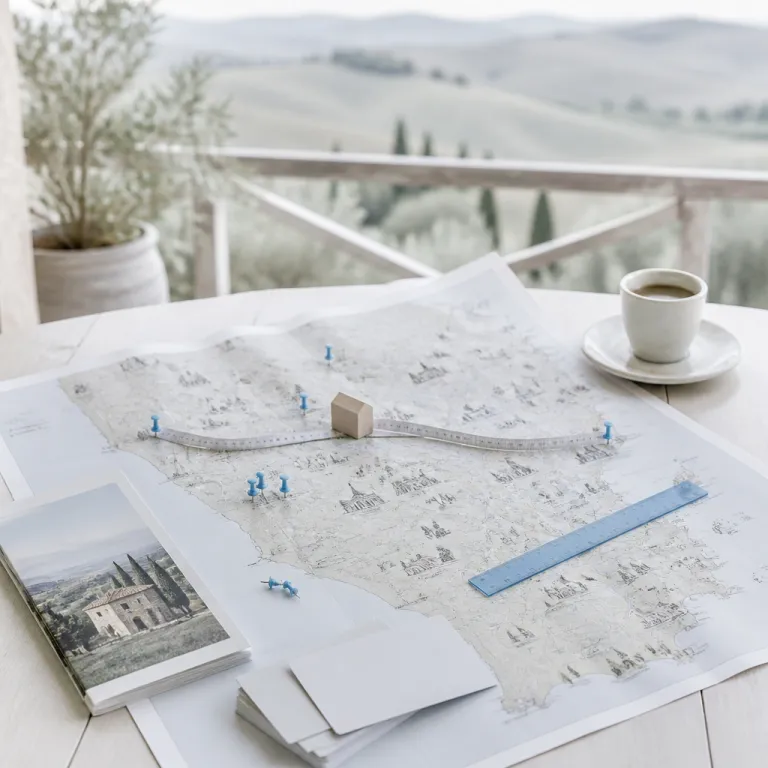
Reading a Tuscany Italy map with attractions before you book
A well designed Tuscany Italy map with attractions is your best ally when choosing where to stay. When you see how each Tuscan town relates to the coast, the rolling hills, and the major cities Italy is famous for, you immediately understand which hotel locations will match your style of trip. Use a detailed Tuscany map that layers art and culture highlights, food and wine routes, and nature reserve areas over the main roads and rail lines.
Start by orienting yourself between Florence, Siena, Pisa, and the softer landscapes of Val d’Orcia, because this triangle shapes most first time itineraries in region Tuscany. Florence is the cultural heart of Tuscany Italy, while Siena and the nearby hill towns offer quieter evenings, and Pisa connects you quickly to the sea and to Florence–Pisa train links. When you compare these cities with smaller towns such as San Gimignano or the coastal stretches of Maremma on a single map, you can immediately see how many day trips are realistic from one hotel base.
Look for a travel guide that combines a printed Tuscany map with an interactive digital version, since this makes it easier to switch between broad planning and street level detail. The dataset used by many tourism boards shows that annual tourists reach about 14.4 million overnight arrivals (Statista, “Arrivals in tourist accommodation establishments in Tuscany,” 2019), so planning with maps helps you avoid the most crowded corridors. When you overlay hotel locations on your Tuscany Italy map with attractions, you can quickly filter out beautiful but impractical areas that would fill your days with long transfers instead of relaxed exploration.
Choosing your base city in Tuscany with a map in hand
For travellers who want museums and evening buzz, Florence is the obvious city to mark first on any Tuscany Italy map with attractions. The historic centre concentrates Renaissance art, elegant shopping streets, and the Arno riverfront within a compact area that you can cross on foot in about twenty minutes. When you place your potential hotel on a Florence map, check walking distances to the Duomo, the Uffizi, and the main train station Firenze Santa Maria Novella, because these three points define how easily you can reach other cities Italy highlights.
Those who prefer medieval character and calmer nights often choose Siena as their main town, especially if they plan to explore the surrounding hill towns by car. Siena’s shell shaped Piazza del Campo and the nearby cathedral form a tight historic core, and a good Tuscany map will show car parks just outside the walls where many hotels arrange guest access. From here, the road network fans out towards Val d’Orcia, San Gimignano, and the wine country south of Florence and Pisa, so a central hotel can reduce driving times dramatically.
Pisa works well as a base when you want both city comforts and quick access to the sea, thanks to its airport and rail links. On your Tuscany Italy map with attractions, highlight the Leaning Tower complex around Piazza dei Miracoli, then look at hotel options within a fifteen minute walk to balance atmosphere with quiet nights. If you prefer a less urban feel, study the coastline and consider staying in Maremma or near Massa Carrara, using the city of Pisa mainly as a daytime stop for art, food, and the iconic leaning tower visit.
Mapping hill towns, rolling hills, and nature for a scenic stay
Many travellers come to Tuscany for its rolling hills, cypress lined lanes, and stone farmhouses, so a Tuscany Italy map with attractions focused on landscapes is essential. When you zoom out from the main cities, you will see how the hill towns cluster in belts, especially around Val d’Orcia and the area between Siena and San Gimignano. Choosing a hotel in these zones means you wake up surrounded by nature, yet remain within an hour’s drive of major art and culture centres.
Val d’Orcia, a UNESCO World Heritage cultural landscape since 2004 (UNESCO World Heritage Centre, “Val d’Orcia”), is one of the most photogenic parts of region Tuscany, and a detailed Tuscany map will show how towns like Pienza, Montalcino, and Montepulciano sit on ridges above the valleys. Mark these towns, then trace the minor roads that link them, because staying near one of these junctions can cut your daily driving time in half. Garfagnana, north of Lucca, offers a different kind of nature, with deep valleys and chestnut forests, so if hiking and quiet evenings appeal to you, look for a hotel near a nature reserve trailhead rather than in a busy town.
The wild coastal landscapes of Maremma contrast beautifully with the softer inland hills, and a good travel guide map will highlight both the protected nature reserve areas and the more developed beach stretches. Here, you might choose a hotel that opens directly onto the sea, then plan day trips inland to hill towns while returning each evening to the coast. When you fill your Tuscany Italy map with attractions that mix nature, small towns, and a few cities, you create a balanced itinerary that suits both active days and restful nights.
Using a Tuscany Italy map with attractions to plan food and wine stays
Food and wine are central to any stay in Tuscany, so your Tuscany Italy map with attractions should clearly mark key food and wine areas. Chianti, between Florence and Siena, is the most famous wine region, and a good map will show how its villages line the ridge roads that connect the two cities. If you book a hotel along this corridor, you can spend your days visiting wineries and small towns, then return easily to either Florence or Siena for late evening art or concerts.
South of Siena, the wine towns of Montalcino and Montepulciano anchor another cluster of vineyards, and here a rural hotel can immerse you in food Tuscany traditions. Look for properties within a short drive of both a wine producing town and a larger road, because this combination lets you enjoy long lunches without sacrificing access to other attractions. In these areas, many restaurants focus on seasonal food, pairing local olive oil, pecorino cheese, and game with the region’s red wines, so mapping your meals in advance can be as rewarding as mapping museums.
Along the coast in Maremma and around Massa Carrara, seafood and white wines shape a different expression of Tuscan cuisine, and a regional map will help you link coastal towns with inland vineyards. When you plan, alternate days focused on food and wine experiences with days dedicated to art and culture in Florence, Pisa, or Siena, using the rail and road network shown on your Tuscany map to avoid backtracking. This approach ensures that your hotel choice supports a varied itinerary, rather than forcing you to choose between city restaurants and countryside osterie every night.
Practical mapping tips for hotel logistics and transport
Beyond scenery and cuisine, a Tuscany Italy map with attractions is a practical tool for understanding transport and hotel logistics. First, identify the main rail lines linking Florence, Pisa, Siena, and the coastal cities, then check how far potential hotels sit from each station. If you plan to rely on public transport rather than a rental car, staying within a ten to fifteen minute walk of a station in a medium sized town can save you both time and stress.
For self drive trips, use your Tuscany map to study road categories, distinguishing between fast regional roads and slower scenic lanes that wind through hill towns. Hotels just outside historic centres often offer easier parking, while still allowing you to walk into the old town for dinner and evening strolls. When is the best time to arrive by car in a walled city such as Siena or San Gimignano? Early afternoon usually avoids both commuter traffic and the peak of day trip crowds.
Guided tours and local buses can complement your own planning, and many travel guide maps now integrate pick up points and timetables. The official tourism data notes that UNESCO sites in Tuscany number seven (UNESCO World Heritage Centre, list for the Tuscany region, accessed 2024), including Florence, Pisa’s Piazza dei Miracoli, Siena’s historic centre, Val d’Orcia, San Gimignano, Pienza, and the Medici Villas and Gardens, so mapping these in relation to your hotel helps you group visits efficiently. Remember the expert advice often shared with first time visitors: “Book accommodations in advance, learn basic Italian phrases, respect local customs.”
Aligning your hotel choice with the best time and style of stay
Seasonality changes how you should read a Tuscany Italy map with attractions when choosing where to sleep. Spring and autumn, widely regarded as the best time to visit, bring mild temperatures and clearer views of the rolling hills, so countryside hotels near nature reserve areas feel particularly appealing. In high summer, by contrast, a city hotel in Florence or Pisa with strong air conditioning and easy access to evening walks along the river can be more comfortable.
When you plan winter stays, focus your Tuscany map on cities and larger towns, because some rural properties and restaurants close or reduce services. Florence, Siena, and Pisa remain lively all year, and their compact centres mean you can walk between art sites, cafés, and your hotel without long exposures to cold or rain. During these quieter months, you may find better value in central locations, allowing you to stay closer to landmarks such as the Duomo, Piazza del Campo, or the leaning tower complex around Piazza dei Miracoli.
Whatever the season, align your hotel choice with the experiences you have highlighted on your Tuscany Italy map with attractions. If your priorities lean towards art and culture, stay within walking distance of major museums in a city, while those who value nature and silence should choose smaller towns or rural estates near Garfagnana, Val d’Orcia, or Maremma. By letting the map guide both your daily routes and your nights, you transform a simple hotel booking into a coherent Tuscan journey that balances comfort, access, and a strong sense of place.
Key figures to keep in mind when reading your Tuscany map
- Annual tourists in Tuscany reach about 14.4 million visitors, according to Statista data for 2019, which means that using a Tuscany Italy map with attractions helps you plan around the busiest corridors and choose hotels in less congested towns.
- The region counts 7 UNESCO sites, based on UNESCO World Heritage Centre listings for Tuscany, including Florence, Pisa’s Piazza dei Miracoli, Siena’s historic centre, Val d’Orcia, San Gimignano, Pienza, and the Medici Villas and Gardens, so marking these on your Tuscany map clarifies how many you can visit from a single base.
- The tourism calendar is effectively year round, with spring bringing blooming landscapes, summer focusing on festivals, autumn centred on harvest season, and winter offering fewer tourists, so your perception of distance on the map will change with crowd levels.
FAQ about using a Tuscany Italy map with attractions for hotel planning
What are must see attractions to mark first on a Tuscany map ?
When you open your Tuscany Italy map with attractions, start by marking Florence Cathedral, the Leaning Tower complex around Piazza dei Miracoli in Pisa, and Siena’s Piazza del Campo, because these three sites anchor most first itineraries. Then add Val d’Orcia, San Gimignano, and a few coastal towns in Maremma to balance art with landscapes. Once these are in place, you can search for hotels that sit within one to two hours of your personal highlights.
When is the best time to visit Tuscany for a map based itinerary ?
Spring and autumn are generally the best time to visit, as they offer pleasant temperatures and fewer crowds on the roads between cities and hill towns. During these seasons, you can comfortably combine city stays in Florence or Siena with countryside nights in Val d’Orcia or Garfagnana. Your Tuscany map will feel more manageable, because travel times are not stretched by extreme heat or heavy holiday traffic.
Is it necessary to rent a car if I plan carefully with a map ?
It is not essential to rent a car, since public transport and organized tours cover the main axes between Florence, Pisa, Siena, and several secondary towns. A detailed Tuscany Italy map with attractions, combined with train and bus timetables, allows you to choose hotels near stations or bus hubs. However, if you want to explore remote hill towns or nature reserves, a car still offers the greatest flexibility.
How many hotel bases should I plan on my Tuscany itinerary ?
For a stay of one week, two hotel bases usually work best when you study your Tuscany map carefully. Many travellers choose one city, such as Florence or Siena, and one countryside area, such as Val d’Orcia or Maremma, to reduce packing and unpacking. This approach keeps daily drives reasonable while still allowing you to reach several UNESCO heritage sites and varied landscapes.
How can I avoid crowds at major attractions shown on the map ?
Use your Tuscany Italy map with attractions to plan early morning or late afternoon visits to the busiest sites, such as the leaning tower area in Pisa or Florence’s main museums. Staying in a nearby town rather than directly beside the landmark can also help, since you can arrive before day trip groups. Combining this timing strategy with off peak travel seasons makes the region feel more relaxed, even in popular cities.