Planning your tuscany Italy train travel guide around Florence city stays
Florence sits at the heart of Tuscany and works beautifully as a rail hub. Many travelers use one main Italy train itinerary as their personal tuscany Italy train travel guide, then add short hotel based detours to hill towns. This approach keeps your Florence city stays relaxed while still allowing ambitious day trips by train.
The primary Florence station is Firenze Santa Maria Novella, usually written as Florence SMN on boards and train tickets. This central station connects high speed trains, Intercity trains, and regional trains across Tuscany and wider Italy, so it anchors almost every tuscany train plan. When you choose a hotel, verify walking distance to Florence SMN station or easy tram access for smooth train travel.
Most long distance trains are operated by Trenitalia and Italo, the two main Italian rail companies. Trenitalia runs Frecciarossa and Frecciargento high speed trains, plus Intercity and regional trains that reach smaller Tuscan stations. Italo focuses on high speed routes, so Italo trains are ideal when your tuscany Italy train travel guide includes fast hops between Florence, Rome, and trains Milan services via Roma Termini and Milano Centrale.
When planning where to stay, align your hotel nights with your rail segments and station choices. For example, one day might focus on Florence city museums, while the next day uses a regional train to reach Siena or Pisa from the same station. This rhythm keeps packing light and lets you buy tickets strategically instead of improvising at every ticket office.
Many visitors worry about how to buy train tickets and which trains to choose. In practice, you can buy ticket options online in advance for high speed trains, then use station ticket machines for flexible regional trains on the day. A clear tuscany train plan helps you decide when to buy tickets early and when to keep your schedule free.
Choosing Florence hotels near stations and rooftop views
For a hotel focused tuscany Italy train travel guide, proximity to Florence SMN station matters as much as style. Properties within about 800 metres of the station let you walk with luggage, then reach rooftop terraces in the historic centre within minutes. This balance is ideal if you want both efficient train travel and atmospheric Florence city evenings.
Look for hotels that specify walking times to the main Italian rail hub at Florence SMN, not just generic references to the city centre. Some stays sit near smaller Florence stations such as Campo di Marte, which work for regional trains but are less convenient for Frecciarossa or Italo high speed trains. When you compare options, check whether your preferred rooftop bar or terrace is on site or a short stroll away.
Travelers who prioritise art often pair their hotel search with key museums and rail access. A useful resource on how Tuscany’s top museums shape smart hotel choices is available in this guide on museum focused hotel decisions in Florence. Aligning gallery visits with your tuscany train schedule means you can enjoy a late rooftop aperitivo without worrying about late night trains.
When you stay near Florence SMN station, you gain quick access to Trenitalia high speed services and Intercity trains for longer journeys. At the same time, you remain close to tram lines that link the station with quieter neighbourhoods where some hotels offer panoramic rooftop views. This combination suits guests who want to feel part of the Italian city while still catching early trains.
Noise can be a concern near any busy station, especially where speed trains arrive late at night. Ask hotels about soundproofing, upper floor rooms, and whether rooftop terraces face the rail tracks or the Duomo skyline. A well chosen Florence hotel can turn a practical tuscany Italy train travel guide into a stay defined by elegant views rather than station announcements.
Using high speed and Intercity trains for Tuscan day trips
High speed trains and Intercity trains shape how far you can roam from Florence in a single day. Frecciarossa and Frecciargento services link Florence SMN with Rome, Naples, and trains Milan at impressive speed, while Intercity trains fill gaps between major cities. Your tuscany Italy train travel guide should distinguish clearly between these speed trains and slower regional trains.
For long day trips, high speed rail is usually worth the slightly higher fare. A Frecciarossa or Frecciargento train from Florence to Rome can take under 90 minutes, leaving time for a Rome Naples connection if you are continuing south. Many travelers base themselves in a Florence hotel for several nights, then use one day for a Rome side trip and another day for a Milan visit by high speed trains.
Intercity trains are slower than Frecciarossa but often cheaper and still comfortable. These Intercity services connect Florence with coastal areas and secondary cities, so they can support a more relaxed tuscany train itinerary. When you compare Intercity versus speed intercity options, check both journey time and arrival station in each city.
Tickets for high speed trains and Intercity trains are best booked in advance. You can buy tickets online through Trenitalia or Italo, then either print them or keep them on your phone for free digital access. For regional trains within Tuscany, many travelers prefer to buy ticket options on the day at station ticket machines.
When planning hotel nights, consider which day trips justify a very early train. For example, a Florence based itinerary like the one outlined in this refined three day Florence and Tuscany plan works well with a central hotel near Florence SMN. This location lets you catch a first train of the day, then return in time for sunset drinks on a rooftop terrace overlooking the city.
Regional trains, hill towns, and hotel bases in Tuscany
Regional trains are the backbone of any detailed tuscany Italy train travel guide focused on smaller towns. These slower trains link Florence with places such as Pisa, Lucca, Arezzo, and the Chianti gateway stations, often with scenic views along the way. For many visitors, regional trains feel more authentically Italian than high speed services.
Some iconic Tuscan destinations, such as San Gimignano, do not have their own rail station. In these cases, your tuscany train plan will combine regional trains with local buses or private transfers from nearby stations like Poggibonsi. When choosing a hotel, consider whether you prefer to stay in Florence and visit San Gimignano as a day trip, or sleep in the countryside and use trains mainly for arrival and departure.
Regional trains usually do not require seat reservations, which keeps your schedule flexible. You can buy ticket options at the ticket office or use ticket machines at Florence SMN and other main Italian stations, then validate paper tickets before boarding. This flexibility suits travelers who want to adjust their day according to weather or mood.
Hotels in smaller Tuscan cities near stations can work well as alternative bases. For example, staying in Pisa or Lucca places you closer to the coast while still allowing easy train travel back to Florence for a day. In each city, check walking distance from the station to your hotel, especially if you plan to arrive on a late train.
When planning multiple bases, think about luggage and check in times. A compact suitcase makes it easier to change stations and trains, especially on regional services that can be busy at peak hours. Many hotels offer free luggage storage on arrival or departure day, which lets you enjoy one more Tuscan hill town before your final Italy train journey.
Buying train tickets, using stations, and timing your days
Understanding how to buy train tickets and navigate stations will make your tuscany Italy train travel guide far more practical. At major stations such as Florence SMN, you will find staffed ticket offices, self service ticket machines, and clear signage for platforms. Smaller Tuscan stations may only have machines, so it helps to practise the process in a larger city first.
For high speed trains and Intercity trains, it is wise to buy tickets online in advance, especially on busy routes like Florence to Rome or trains Milan. Online purchases through Trenitalia or Italo allow you to choose specific trains, compare speed trains with slower options, and sometimes access promotional fares. When you buy tickets this way, you usually receive a code that functions as your train ticket without needing validation.
Regional trains work differently and support more spontaneous travel. You can buy ticket options at the station on the day, then validate paper tickets in the small green or yellow machines before boarding any regional train. Failure to validate can lead to fines, so include this step in your daily routine as carefully as you check your platform.
Timing your day around rail schedules helps you enjoy both sightseeing and hotel comforts. Aim to leave enough time between your last train and any rooftop reservation at your Florence hotel, especially if you are returning from a hill town or from San Gimignano via bus and rail. Trains in Italy are generally reliable, but occasional delays mean you should avoid very tight evening plans.
When comparing routes such as Florence to Rome Naples or Florence to other main Italian cities, check whether your train uses central stations. Some high speed services stop at outlying stations that require extra transfers, which can eat into your day. A well structured tuscany train plan will favour direct services that bring you back to Florence SMN in time for a relaxed evening in the city.
Rooftop views, Florence nights, and rail linked hotel strategies
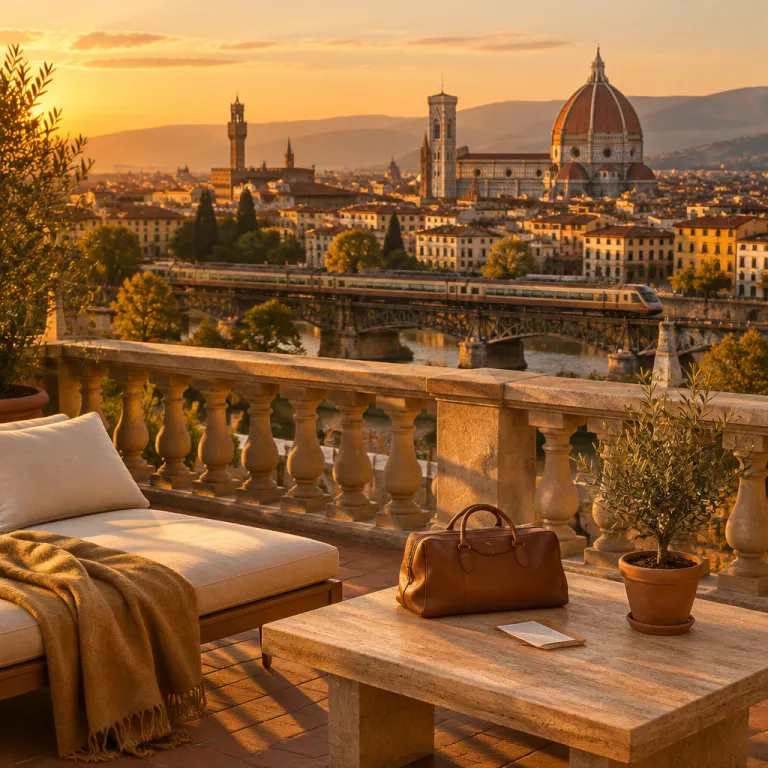
Florence is one of the few Italian cities where you can combine efficient rail access with spectacular rooftop views from many hotels. After a day of train travel through Tuscany, there is particular pleasure in watching the Duomo glow at sunset from a terrace. Choosing the right property turns your tuscany Italy train travel guide into a sequence of memorable evenings rather than just a list of stations.
When evaluating hotels, look beyond generic photos and study rooftop layouts. Some terraces offer full panoramic views of the city skyline, while others face internal courtyards or rail tracks near Florence SMN station. If rooftop ambience matters to you, email the hotel to request images of the exact terrace and ask which room categories guarantee access.
Travelers who plan several rail based day trips should prioritise late check out or free luggage storage. This allows you to enjoy one last rooftop coffee or a slow breakfast before walking to the station for your final Italy train. Many properties near Florence SMN understand these patterns and tailor services to guests who rely heavily on trains.
For those exploring lesser known Tuscan corners, a guide to hotels near hidden gems in Tuscany can help you choose secondary bases. These smaller city or countryside stays may not sit beside a major station, but they often pair characterful rooms with easy access to regional trains. Combining a few nights in Florence with a shorter stay near a hill town creates a balanced itinerary.
Ultimately, the most successful tuscany train itineraries respect both rail timetables and human rhythms. Plan your longest train journeys earlier in the day, then reserve evenings for Florence rooftops, riverside walks, and quiet streets. With this structure, the technical details of Trenitalia, Italo, and ticket machines fade into the background, leaving space for the city itself.
Key rail routes, multi city links, and extending beyond Tuscany
A refined tuscany Italy train travel guide often extends beyond regional borders, using Florence as a hinge between northern and southern Italy. From Florence SMN, high speed Frecciarossa and Frecciargento trains run frequently to Rome, while some continue towards Naples and Salerno. Other speed trains and Intercity services connect northwards to Bologna, Venice, and trains Milan, making multi city itineraries straightforward.
When planning routes such as Florence to Rome Naples, decide whether you prefer one long day of travel or several shorter hops with hotel stops. High speed rail makes it realistic to leave Florence after breakfast and arrive in Naples by early afternoon, even with a change in Rome. Intercity trains take longer but can be more economical, especially if you buy tickets well in advance.
For travelers who love both art cities and smaller towns, a layered approach works well. Start with several nights in Florence, using regional trains for Tuscan excursions and one day for a high speed trip to Rome. Then continue by Italy train to another main Italian city such as Milan, where you can connect with international rail or flights.
As you extend your itinerary, keep an eye on station names in each city. Large urban areas often have multiple stations, and not every train stops at the most central one, so always confirm whether your hotel is near the arrival station. This detail can save you time and taxi costs at the end of a long day on the rail network.
Throughout your journey, aim to keep digital and paper copies of all train tickets, especially when using different operators like Trenitalia and Italo. Having quick access to your reservations makes platform changes and checks by conductors smoother, leaving you free to focus on the landscapes of Tuscany and the rooftops of Florence. With thoughtful planning, the rail lines of Italy become a graceful framework for your hotel choices rather than a logistical challenge.
Key statistics on train travel in Tuscany and Florence
- Florence SMN is one of the busiest rail hubs in central Italy according to Rete Ferroviaria Italiana (RFI), which makes it a highly practical base for hotel stays and day trips.
- High speed Frecciarossa trains can reach up to 300 km/h on key routes, which allows journeys such as Florence to Rome in about 1 hour 30 minutes on the fastest services, based on Trenitalia timetable data.
- Regional trains in Tuscany serve more than 200 stations and stops, according to regional transport authorities, giving access to many smaller cities and towns that are not reachable by high speed rail.
- On popular routes like Florence to Rome, advance purchase fares on high speed trains can be up to 60 percent cheaper than last minute flexible tickets, based on published Trenitalia and Italo fare structures.
- Tourism reports from the Italian National Institute of Statistics (ISTAT) indicate that Tuscany consistently ranks among the top three Italian regions for international overnight stays, which reinforces the value of rail linked hotel planning in Florence.
Frequently asked questions about train travel and hotels in Tuscany
Is Florence a good base in Tuscany for train travel?
Florence is an excellent base because Florence SMN station offers frequent high speed, Intercity, and regional trains across Tuscany and the rest of Italy. You can reach major Tuscan cities such as Pisa, Lucca, and Arezzo by regional train, while Frecciarossa services connect quickly to Rome and Milan. Many hotels sit within walking distance of the station, which simplifies both arrival and day trips.
Should I book high speed train tickets in advance in Italy?
High speed train tickets on Frecciarossa, Frecciargento, and Italo services are best booked in advance, especially on busy routes like Florence to Rome. Early purchase usually offers lower fares and guarantees a seat on your preferred departure. Regional train tickets within Tuscany can often be bought on the day at stations without problems.
How close should my Florence hotel be to the station?
For most travelers, a hotel within about 10 to 15 minutes’ walk of Florence SMN station offers the best balance between convenience and atmosphere. This distance keeps luggage transfers manageable while still placing you near the historic centre and rooftop terraces. If you stay farther away, check tram or bus links to the station to avoid relying on taxis for every train journey.
Can I visit San Gimignano by train from Florence?
San Gimignano does not have its own rail station, so you combine a regional train from Florence to Poggibonsi with a local bus or private transfer. The total journey usually takes around 1 hour 30 minutes to 2 hours each way, depending on connections. Many visitors choose to stay in Florence and visit San Gimignano as a day trip rather than changing hotels.
Is it better to rent a car or use trains in Tuscany?
Trains are ideal if you plan to focus on cities such as Florence, Pisa, Lucca, and Arezzo, because parking in historic centres can be difficult and expensive. A rental car offers more flexibility for remote villages and countryside stays, but it adds costs such as fuel, tolls, and parking. Many travelers combine both approaches by using trains for the main Italian cities and renting a car only for a few days in rural Tuscany.